GEO vs SEO: Why Google Still Drives 34x More Traffic Than ChatGPT & How to Win Both in 2026
 Junayed Leon August 20, 2026 7 min read
Summary
WordStream’s 2026 benchmark is the reality check every marketer needs: Google still drives 34x more traffic than ChatGPT, Perplexity and Gemini combined. At the same time, 38% of AI Overview citations come from pages that don’t rank on page 1. GEO is not replacing SEO — it’s a parallel surface that re-ranks your organic equity. One workflow can win both.
The 34x Reality Check: SEO Still Pays the Bills
AI search is growing fast, but scale matters. Ahrefs (June 2026) and WordStream’s Small Business Report put it in perspective: 60% of businesses saw zero traffic impact from AI search in 2025, and Google’s Q4 2025 search ad revenue grew 17% YoY to $63.07B — even as AI Overviews expanded to 48% of queries. For high-intent, commercial queries, traditional SEO remains the primary revenue driver. The playbook below keeps SEO as the foundation and layers GEO on top — so you don’t chase two separate strategies.
Nearly 40% of AI Overview citations come from the organic top 100, not just top 10. If you don’t rank, you won’t be cited. GEO without SEO is a house built on sand.
GEO vs SEO: 5 Differences That Actually Matter
1. Citations Replace Links (and They’re Optional)
Traditional SEO earns clicks via blue links. GEO earns citations — often without a link at all. ChatGPT rarely links, Perplexity always does, AI Overviews cite 4–6 sources on average. Your goal shifts from “rank #1” to “be the sentence the model lifts.” That sentence must be self-contained, factual, and attributable.
2. Authority is Entity-Based, Not Just Backlinks
Google uses backlinks + Core Web Vitals. Answer engines use entity authority: consistent NAP across Wikidata, Crunchbase, LinkedIn, GBP, plus founder profiles. Princeton’s GEO study found brand mentions correlate 0.71 with AI visibility — stronger than domain authority alone. If models can’t resolve “Junayed Leon” to one entity, you won’t be cited.
3. Structured, Fact-Rich Content is Premium Fuel
AI models love structure: H2/H3 hierarchies, bullets, tables, FAQ, HowTo, and short definitions (<60 words). Princeton/IIT Delhi found adding statistics + citations + quotations lifts visibility up to 40% vs keyword stuffing. Every section should carry one number, one citation, or one quote. Vague marketing prose loses to a 200-word fact block.
4. Brand Visibility Must Expand Beyond Google
Your site alone is not enough. AI crawlers pull from Reddit (24 citations in our May 2026 55-SERP test), YouTube (14), and LinkedIn. “Search everywhere optimization” means repurposing each insight into video, LinkedIn, and community answers — then linking back with consistent entity scaffolding.
5. Content is Prompt-Driven, Not Keyword-Driven
Users ask ChatGPT in conversational, long-tail prompts, not 2-word keywords. One-size-fits-all pages optimized for “SEO tools” won’t satisfy “best SEO tools for B2B SaaS with HubSpot integration under $200/mo.” Build prompt-aligned sections that answer nuanced, follow-up questions directly.
The Integrated Playbook: One Workflow That Wins Both
Don’t run two teams. These five edits improve traditional rankings and AI citation rate simultaneously.
Answer Capsules Above the Fold
Add a 2–4 sentence “Quick Answer” callout at the top of every priority page: state the question, give the direct answer, cite a stat. Mark it data-speakable and add matching FAQPage JSON-LD. Google uses it for featured snippets; LLMs lift it verbatim.
Named Case Studies With Measurable Outcomes
Pair Service schema with a real, dated, founder-attributed engagement and the metric that moved. Example: “PFEC Global, Jan 2026 — Technical SEO + entity cleanup → 150% organic growth, 4:1 ROAS.” Specific named results get quoted; fabricated star ratings get discounted and penalized.
Topic Clusters, Not Keyword Sprawl
Pick 3–5 money queries, build a pillar page for each, and surround it with 4–6 deep insights linked back to the pillar. Five thin pages lose to one strong page; one strong page loses to a hub with eight linked pieces. Internal linking passes authority on both surfaces.
Entity Reinforcement
Every page that mentions your brand should also mention founder, founding year, and office. Repeat the scaffolding so models resolve “Junayed Leon — Dhaka, 2021 — SEO & Meta Marketing” to one entity. Add Organization + Person schema with founder, sameAs (LinkedIn, Crunchbase, Wikidata), and address.
AI Bot Allowlist + Telemetry
Explicitly Allow: / for GPTBot, OAI-SearchBot, PerplexityBot, ClaudeBot, Google-Extended, Applebot-Extended in robots.txt, then log hits. You can’t improve what you can’t see. Many sites inherited a wildcard Disallow and are invisible to half the GEO surface.
| Dimension | Traditional SEO | GEO |
|---|---|---|
| KPI | Rankings, clicks (GSC) | Citation rate, share of voice |
| Unit | Ranked URL | Cited passage |
| Schema | Article, Breadcrumb | Article + FAQPage + DefinedTerm + datePublished |
How to Measure GEO Without Guessing
There is no Search Console for ChatGPT. Use proxies: AI crawler hit logs (GPTBot, PerplexityBot), cited-source tracking on Perplexity (always shows sources), brand-name search tests (“what is Junayed Leon?”), and referral traffic from chat.openai.com / perplexity.ai. Track share of citation for your 10 money queries weekly — not rankings alone.
What to Stop Doing
- Walls of marketing prose with no extractable facts — both surfaces prefer specific over flattering.
- Hiding substantive content behind “Read more” or JS hydration — server-render the answer.
- Schema spam — fake Review or FAQPage for unasked questions gets discounted and penalized.
- Generic AI content with no first-party evidence — models detect statistical-mean writing and skip it.
GEO is not a campaign for a quarter. It’s the next layer of the same discipline. Do one workflow well — crawlable HTML, structured data, topical depth, entity clarity — and you’ll earn rankings and get passages cited. That’s the opening most competitors are missing.
How The Framework Works
Four moves that turn a growth strategy into measurable results.
Research
Audit the funnel and find the single lever with the highest ROI.
Execute
Ship focused campaigns and content built around that lever.
Measure
Track the metrics that actually predict revenue, not vanity numbers.
Scale
Double down on what works and cut everything that does not.
Frequently Asked Questions
What is GEO and how is it different from SEO?
GEO (Generative Engine Optimization) optimizes to be cited inside AI answers from ChatGPT, Perplexity, Gemini and Google AI Overviews — not to rank a blue link. SEO optimizes to rank. The Princeton GEO paper found adding statistics + citations + quotations lifts AI visibility up to 40%. Same plumbing (crawlable HTML, schema, speed, E-E-A-T), different unit: ranked URL vs cited passage. Do GEO without SEO and you have nothing to cite.
Does GEO replace SEO? Should I stop traditional SEO?
No. Nearly 40% of AI Overview citations come from the organic top 10 and ~70% from the top 100 (WordStream 2026). AI Overviews re-rank organic results; they don’t replace them. WordStream: Google still drives 34x more traffic than ChatGPT and 60% of SMBs saw zero AI impact in 2025. Keep SEO as the foundation — layer GEO on the same pages.
How do I get cited in AI Overviews and ChatGPT?
Three levers that move both surfaces: 1) Answer-first formatting — 60-word definitions, H2s that mirror prompts, self-contained paragraphs; 2) Entity reinforcement — consistent NAP, Wikidata/Crunchbase/LinkedIn, Organization + Person schema with founder/sameAs; 3) Citable specifics — every section needs one number, one citation or one quote. Add FAQPage + datePublished — missing date is the #1 reason well-written pages get skipped.
How do I measure GEO without a Search Console for AI?
Use proxies: AI crawler hit logs (GPTBot, PerplexityBot, ClaudeBot fetches per URL), Perplexity cited-source tracking (always shows sources), brand-name tests (“what is Junayed Leon?” across ChatGPT/Claude/Gemini), and referral traffic from chat.openai.com / perplexity.ai. Track share of citation for your 10 money queries weekly — not just rankings.
How should I handle AI crawlers and llms.txt?
Explicitly Allow: / for GPTBot, OAI-SearchBot, PerplexityBot, ClaudeBot, Google-Extended, Applebot-Extended, Bytespider in robots.txt — many sites inherited a wildcard Disallow and are invisible to half the GEO surface. Then log hits. llms.txt (at /llms.txt, Markdown) is emerging as the AI equivalent of robots.txt — adoption is still only ~2% (AIOSEO 39.6% of those), but it helps models find canonical URLs. Don’t block via robots and expect citations.
Related Insights
Facebook Ads vs Google Ads: Which One Will Be Best for You in 2027?
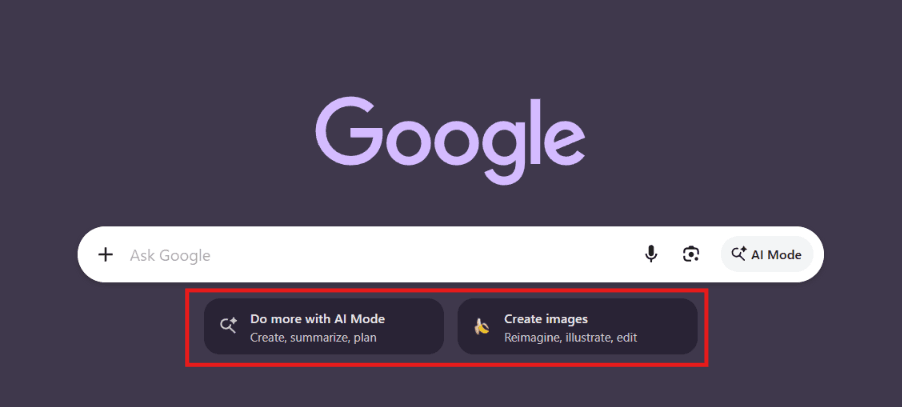
Google AI Mode and the Future of SEO: What Changes Today?

Agentic AI in Study Abroad Marketing: Complete Guide
Junayed Leon
Google, Creative IT and NSDA-certified SEO & Meta Marketing expert with 4+ years of experience building data-led organic and paid growth strategies that increase search visibility by 150%+ and deliver a 4:1 ROAS.
More insights from Junayed LeonWant This Applied To Your Business?
Let us talk about how this strategy fits your growth goals.
Discuss Strategy