 Junayed Leon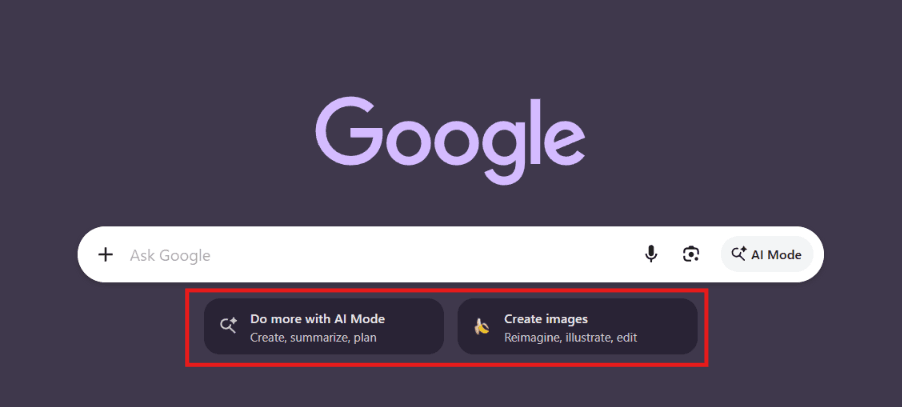
This morning, I arrived at the office, opened my laptop, and went to Google like I normally do.
But something immediately caught my attention.
Right below the familiar search bar, Google was prominently showing two options: “Do more with AI Mode” and “Create images.”
I stopped for a moment.
Not because Google had changed a few buttons. Google experiments with its interface all the time. What interested me was what those buttons represented.
Google is no longer keeping AI somewhere in the background. AI is gradually becoming part of the main Search experience.
As someone who works closely with SEO and digital marketing, I see this as another clear indication of where search is heading.
The question for SEO professionals is no longer only:
“How do I rank higher on Google?”
Increasingly, we also need to ask:
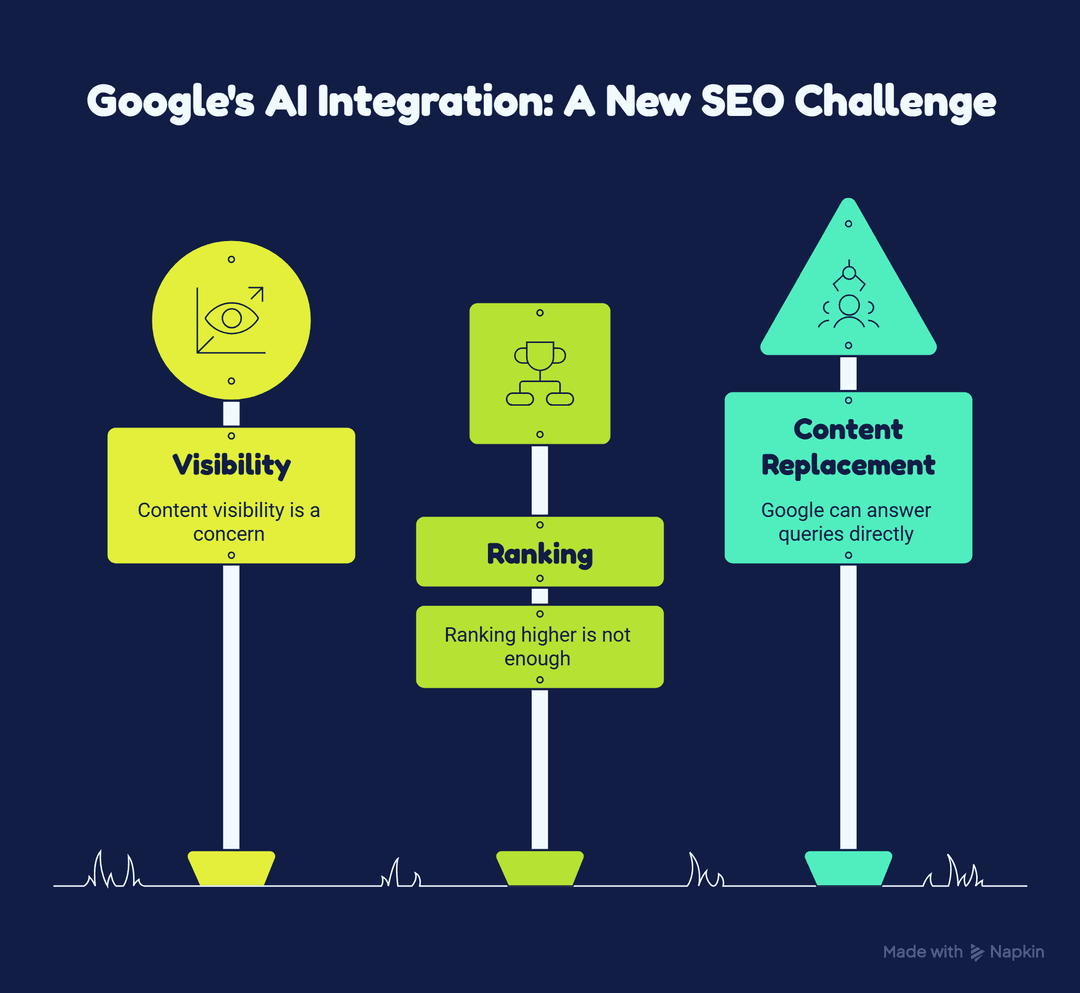
“How does my content stay visible when Google itself can answer the query?”
Google Search Is Becoming More Than a Search Engine
For years, the basic search journey was simple.
A user typed a query.
Google displayed a list of websites.
The user clicked one of those websites.
That behaviour created the SEO industry we know today. Businesses competed for the first page, marketers tracked keyword positions, and content teams created pages specifically designed to capture organic traffic.
Being number one mattered—a lot.
But Google has been gradually changing this experience.
Featured snippets started answering questions directly. Knowledge panels gave users information without requiring a website visit. Maps transformed local search. Shopping results changed commercial searches.
Now AI is pushing this transformation much further.
From Finding Answers to Generating Answers
Traditional Google Search mainly helped users find information.
AI-powered search can actually process that information and construct an answer.
A user can now ask a complicated question involving several factors, receive a detailed response, and continue the conversation with follow-up questions.
This changes the search journey significantly.
Instead of:
Search → Results → Website → Answer
we are increasingly seeing:
Question → AI Answer → Follow-up Question → Optional Website Visit
That word—optional—is important for anyone working in SEO.
AI Mode Changes How People Search
Consider a student researching study-abroad options.
They might search:
“Which country is best for studying data science with affordable tuition and good post-study work opportunities?”
Traditionally, answering that question could require several individual searches:
- Best countries for data science
- International student tuition fees
- Post-study work visas
- Graduate employment opportunities
- Cost of living
- Best universities for data science
The student could end up visiting ten or twenty websites.
AI Mode can potentially bring parts of that research together into one experience.
It can interpret the original question, explore related information, compare options, and present the user with a structured response.
The user can then continue by asking:
“Which one is cheaper?”
or:
“What about scholarship opportunities?”
They may not need to perform another traditional Google search at all.
Why This Matters for SEO
SEO has traditionally been heavily influenced by individual search queries.
Find a keyword.
Create a page around it.
Rank the page.
Generate clicks.
But conversational search does not always behave like that.
One question can lead to several related topics without the user manually searching for each one.
This makes topical relevance and depth increasingly important.
Your website should not simply answer one isolated keyword. It should demonstrate that it genuinely understands the larger subject around that keyword.
The “Create Images” Button Is Another Important Signal
The image-generation option on Google’s homepage might initially seem unrelated to SEO.
I think it represents something bigger.
Google used to be somewhere we primarily went to find things.
Now Google increasingly wants users to:
Search. Ask. Compare. Plan. Explore. Create.
That changes Google’s role in the digital journey.
The more users can accomplish directly within Google’s ecosystem, the less frequently every interaction needs to end with a website click.
For marketers, that creates a difficult but important question:
How do we build visibility when clicking a website is no longer necessary for every search?
Is Ranking Number One Losing Its Importance?
Not exactly.
Ranking number one still matters, and traditional SEO is certainly not disappearing.
Google still needs websites to understand the web. Search engines still need to crawl, index, interpret, and evaluate content.
Technical SEO still matters.
Backlinks still matter.
Internal linking still matters.
Search intent still matters.
Content quality still matters.
Website authority still matters.
But rankings may no longer provide the complete picture of organic visibility.
Ranking and Visibility Are Becoming Different Things
Imagine your website ranks number one for a particular informational keyword.
Historically, that position could generate a significant share of clicks.
Now imagine Google displays a detailed AI-generated response before the traditional results.
The user reads the response, gets what they need, and leaves.
Technically, you still ranked number one.
But the business impact of that ranking may be very different.
This is why I think SEO professionals will gradually need to separate two concepts:
ranking and visibility.
Your brand could be visible through traditional results, AI-generated responses, images, videos, local results, or other Google experiences.
Ranking remains important.
It is simply becoming one part of a much larger visibility ecosystem.
How the SEO Mindset Is Changing
Here is how I see the transition.
| Traditional SEO mindset | AI-search mindset |
|---|---|
| Rank for individual keywords | Build visibility across search experiences |
| Focus heavily on position | Focus on relevance, authority, and usefulness |
| Target isolated queries | Build strong topical coverage |
| Compete mainly for blue-link clicks | Compete for attention across AI and traditional search |
| Recreate what currently ranks | Add original information and experience |
| Measure rankings and traffic | Measure visibility, engagement, leads, and conversions |
This does not mean throwing away everything we know about SEO.
It means expanding how we think about it.
Generic SEO Content Is Becoming Easier to Replace
This is one of the biggest changes I see coming for content marketing.
A common SEO workflow has been:
Search the target keyword.
Open the top-ranking pages.
Understand their headings.
Cover similar points.
Make the article slightly longer.
Publish it.
That strategy produced an enormous amount of content that basically says the same thing in different words.
AI is particularly good at summarising that kind of information.
If twenty websites provide almost identical explanations, Google does not necessarily need users to visit the twenty-first website to understand the topic.
Original Information Becomes More Valuable
This is where content needs to become harder to replace.
Things such as:
- Original research and data
- First-hand experience
- Real case studies
- Expert observations
- Screenshots and examples
- Unique comparisons
- Proprietary information
- Tools and calculators
create additional value.
For example, writing:
“SEO normally takes several months to produce results.”
is useful, but extremely easy for an AI system to summarise.
Writing about ten real SEO projects, showing their timelines, explaining what happened during each month, and including Search Console examples provides something very different.
The first piece provides information.
The second provides experience and evidence.
That distinction may become increasingly important.
Answer the Question, Then Give People a Reason to Click
I think this should become one of the most important questions in content strategy:
What does my page offer after the basic answer?
Because simply answering a question may no longer be enough.
Suppose somebody searches:
“How long does SEO take?”
Google can provide a quick answer almost immediately.
But the user might still visit a website if that page promises something deeper.
Create Value Beyond the Summary
A strong article could include:
- A real six-month SEO timeline
- Differences between new and established websites
- Search Console screenshots
- Common reasons SEO campaigns take longer
- Results from actual projects
- Industry-specific examples
Google can summarise facts.
It is much harder to replace genuine experience, detailed examples, and proprietary insights.
That is where I believe websites can continue creating meaningful reasons for users to click.
Topical Authority Matters More Than Isolated Keywords
Keyword research is not going anywhere.
But SEO strategies built entirely around separate keywords may become less effective.
Consider someone researching studying in Australia.
Their decision might involve:
tuition fees, scholarships, universities, visas, accommodation, living costs, part-time work, graduate opportunities, and career prospects.
SEO tools may show these as separate keywords.
But the user sees them as one journey:
“Should I study in Australia?”
AI systems are increasingly capable of connecting those questions.
Our websites should do the same.
Build Around the User’s Journey
Instead of publishing random articles based purely on search volume, marketers should think about the complete information journey.
That means stronger topic clusters.
Better internal linking.
Clear information architecture.
Useful supporting content.
And most importantly, a deeper understanding of why someone is searching in the first place.
SEO has always been about keywords.
The next stage of SEO may be much more about understanding the person behind those keywords.
SEO Reporting Will Need to Evolve
For years, most SEO dashboards have focused on familiar numbers:
Rankings.
Impressions.
Clicks.
CTR.
Organic sessions.
Conversions.
Those metrics remain useful, but they may no longer tell the entire story.
SEO teams increasingly need to think about broader questions.
Is our brand appearing when people ask AI systems questions about our industry?
Are search engines associating our website with the topics we want to own?
Are users searching for our brand after discovering it somewhere else?
Are our pages generating fewer clicks but better-qualified visitors?
Ultimately, SEO reporting needs to move beyond asking:
“Where do we rank?”
toward:
“How visible and influential are we throughout the search journey?”
What Should SEO Professionals Do Now?
I would not abandon traditional SEO.
I would strengthen it.
Keep websites technically healthy.
Make pages easy to crawl and understand.
Improve internal linking.
Build legitimate authority.
Understand search intent.
Write clear and useful content.
But I would also put much greater emphasis on originality.
Stop Writing Only for Rankings
Instead of asking:
“How can I write another article that ranks for this keyword?”
ask:
“What can I add to this topic that the existing search results don’t already provide?”
That could be data.
An experiment.
An opinion based on professional experience.
A case study.
A unique framework.
A useful comparison.
A tool.
Even a good personal observation can add something genuinely valuable.
The internet does not need another 2,000-word article created only because a keyword has 5,000 monthly searches.
It needs content that deserves to exist.
SEO Is Not Dying—Its Definition Is Expanding
Whenever Google changes significantly, we hear the same statement:
“SEO is dead.”
I do not believe that.
People still search.
Businesses still need visibility.
Search engines still depend on information published across the web.
Websites still matter.
But the definition of SEO is becoming broader.
SEO may increasingly involve traditional rankings, AI-generated results, images, video, brand mentions, knowledge systems, and other search experiences working together.
Ranking number one will still be valuable.
But becoming a credible source that search engines repeatedly trust and surface could become equally important.
That is why seeing AI Mode and image creation directly beneath Google’s search bar caught my attention.
It was only a homepage change.
Only two buttons.
But small interface changes sometimes reveal much larger behavioural shifts.
Google appears to be moving from:
“What do you want to search for?”
toward:
“What do you want to know, create, or accomplish?”
For SEO professionals, that is a shift worth paying attention to.
The next chapter of SEO may not simply be about getting websites higher on a results page.
It will increasingly be about making brands and their information discoverable, credible, useful, and worth referencing wherever search happens.
And I think we are already entering that chapter.
Facebook Ads vs Google Ads: Which One Will Be Best for You in 2027?
Agentic AI in Study Abroad Marketing: Complete Guide

GEO vs SEO: Why Google Still Drives 34x More Traffic Than ChatGPT & How to Win Both in 2026